The Aston Deathes Hedde
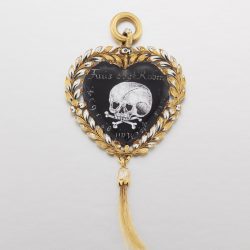
The Aston Deathes Hedde
England, 1635
Long lost Memento Mori Jewel from the celebrated 1635 masterpiece painting Sir Thomas Aston at the Deathbed of his Wife to be offered for sale at The Treasure House Fair this June
The jewel worn by Sir Thomas Aston in the painting was never thought to have survived
‛Hamnet’ era jewel to commemorate his dead son
Lost and found in a UK Collection after four hundred years
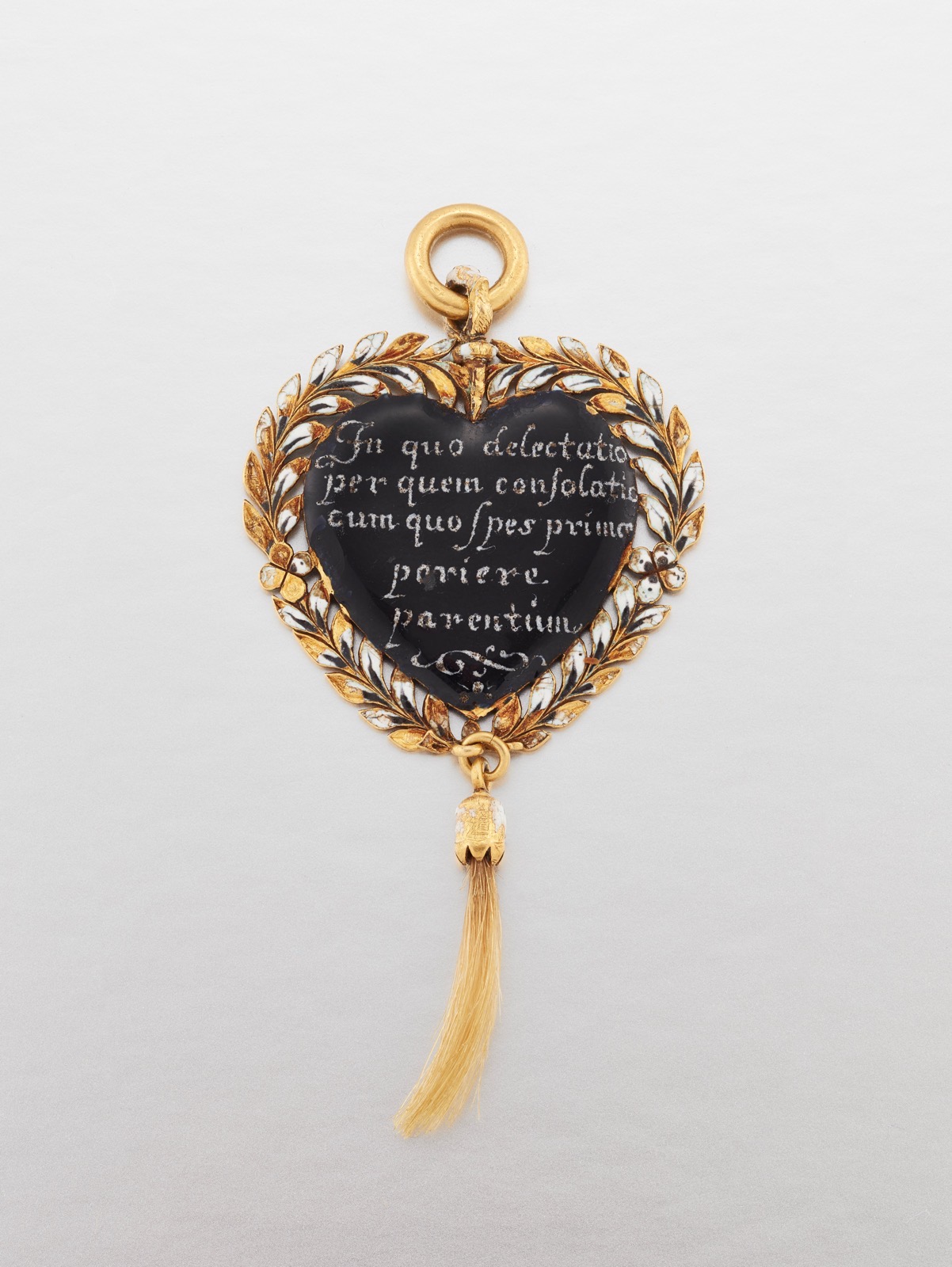
This outstanding and unique jewel is a remarkable example of early 17th century memento mori (remember death). It was made to commemorate the death of Sir Thomas Aston’s six-year-old son Robert Aston who died in 1634.
Heart-shaped and surrounded by a golden wreath the pendant jewel is enamelled in black and white with a death’s head skull and inscriptions in Latin front and back translated as: ‛Your Robert died 4th May 1624 / In whom was our delight, through whom was our consolation, with whom the hope of his parents first perished’. Beneath the jewel is a tassel of Robert’s blonde hair.
Sir Thomas can be seen wearing the jewel in the enigmatic family group portrait known as Sir Thomas Aston at the Deathbed of his Wife. He stands beside his sole surviving child three-year-old Thomas; his three other children Robert, Elizabeth and Jane having already died. The painting was commissioned from Cheshire artist John Souch (c.1593-1645) following the death of Sir Thomas’s beloved wife Lady Magdalen Aston during childbirth in 1635.
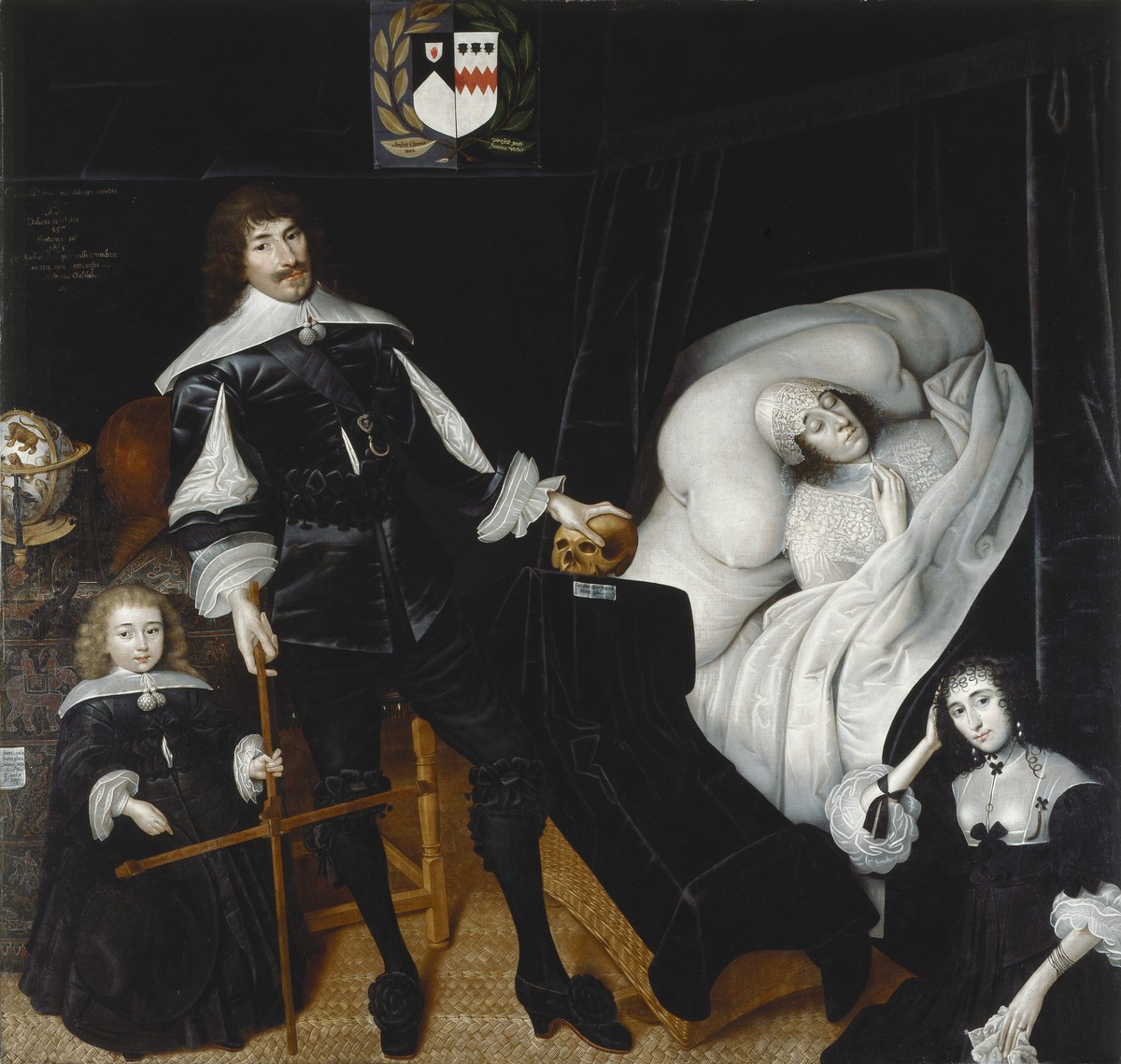
John Souch, 1635, Sir Thomas Aston at the deathbed of his wife. Manchester Art Gallery, UK© Manchester Art Gallery
Located in Lady Aston’s bedchamber at Aston Hall, the monumental vanitas painting is loaded with theological and metaphorical meaning to inspire the viewer to meditations on mortality and the transience of wordly life. The death’s head jewel is meticulously observed by the artist although only now has its inscriptions and meaning be revealed.
The painting was sold by the Aston family in 1927 when it was acquired for Manchester City Gallery through the National Art Collections Fund (now the Art Fund).
Sir Thomas Aston (1600-1645) of Aston Hall, Cheshire, was a courtier, theologian, soldier and poet. Trained in law, he entered parliament and was high sheriff for Cheshire. Knighted by King Charles I, Sir Thomas fought for the Royalist cause in the Civil War before his capture by Parliamentarian forces in Staffordshire. He died of wounds received whilst attempting to escape.
THE ASTON DEATHES HEDDE WILL BE EXHIBITED AT THE TREASURE HOUSE FAIR, ROYAL HOSPITAL CHELSEA , 24-30 JUNE 2026